
AI & Educator Readiness: What the Global Research Shows and Why It Matters
Oct. 21, 2026
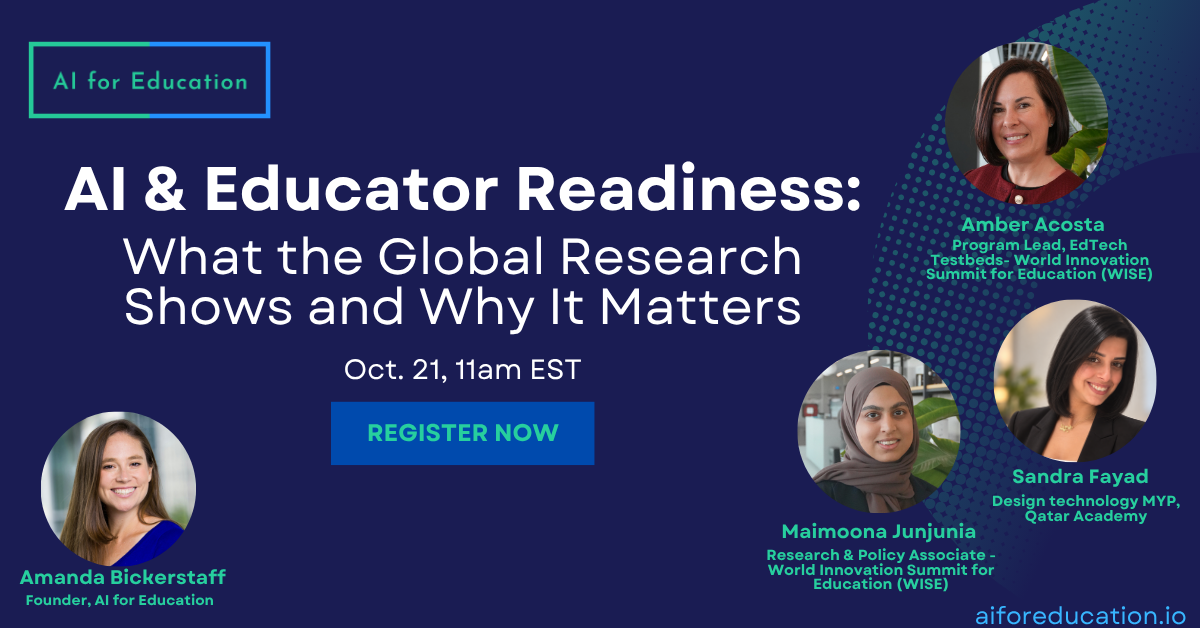
Generative AI is showing up in more K–12 classrooms, but key questions remain: How prepared are teachers? What does effective AI-enabled teaching look like? And under what conditions do these tools actually improve teaching and learning?
Join us for our next free webinar where we connect research, policy, and practice to explore what shapes teachers' engagement, confidence, and capacity to integrate AI meaningfully into classroom practice.
The discussion draws on studies from the World Innovation Summit for Education (WISE) conducted with USC Rossier School of Education, MIT RAISE, and the MIT pK–12 Initiative on how AI is being integrated into K–12 education across 12 countries. Panelists will share USC's research on teacher readiness, WISE × MIT evaluation of AI professional development courses, and findings from the WISE EdTech Testbed where teachers pilot and evaluate AI tools in real classrooms.
In this session, we will:
Share key findings from two WISE-led studies on AI in K–12 education
Discuss lessons from the evaluation of five AI professional development courses
Explore what supports help educators responsibly integrate AI into their classroom practice
Examine emerging evidence on how teachers evaluate and apply AI tools
Can’t make the time? A recording + resources will be emailed to all registrants.
-
Amanda Bickerstaff
Amanda is the Founder and CEO of AI for Education. A former high school science teacher and EdTech executive with over 20 years of experience in the education sector, she has a deep understanding of the challenges and opportunities that AI can offer. She is a frequent consultant, speaker, and writer on the topic of AI in education, leading workshops and professional learning across both K12 and Higher Ed. Amanda is committed to helping schools and teachers maximize their potential through the ethical and equitable adoption of AI.
Amber Acosta
Amber Acosta is the Program Lead for EdTech Testbeds at WISE. In this role she guides schools in Qatar through the exploration and evaluation of innovative educational technologies, working closely with teachers, school leaders, government partners, and researchers to ensure implementations are practical, evidence-driven, and centered on the needs of educators and students.
Amber has over 15 years of teaching and technology leadership experience spanning the USA, Egypt, Bahrain, India, and Qatar. Holding a Bachelor's degree in Business from Fordham University and a Master's degree in Education from Sacred Heart University, she brings a strong foundation in both EdTech program management and classroom-level implementation. Amber was also an EDSAFE Women in AI Fellow and focuses on how AI-enabled tools and AI literacy can be integrated purposefully into teaching and learning.Maimoona Junjunia
Maimoona is a Research and Policy Associate at WISE, where she leads and supports studies on education policy, system resilience, and equity in learning outcomes, working closely with practitioners, policymakers and ministries to translate evidence into action. She served as the WISE Summit Editorial Team for WISE 12 (2025), shaping content for one of the world's leading education convenings.
Her path into education policy grew from a background in partnerships and growth at impact-driven organisations, including curating The Conduit Club London's Impact Program, focused on social justice, education equity, and climate action. She holds a BSc in Business Management from King's College London.Sandra Fayad
Sandra Fayyad is an MYP Design Technology educator at Qatar Academy Doha, bringing over a decade of graphic design experience and six years in education. She holds a Master’s degree in Multidisciplinary Studies from SUNY Buffalo State University and is a Google Certified Educator.
Passionate about innovation in education, Sandra specializes in integrating artificial intelligence, emerging technologies, and inquiry-based learning into design education. Her graduate research explores AI-powered formative feedback, AI literacy, and ethical AI integration. Guided by the philosophy “Think Different,” she is committed to empowering students and educators through creative, meaningful, and human-centered learning experiences.