A guide for leaders vetting AI tools for safety, privacy, and security
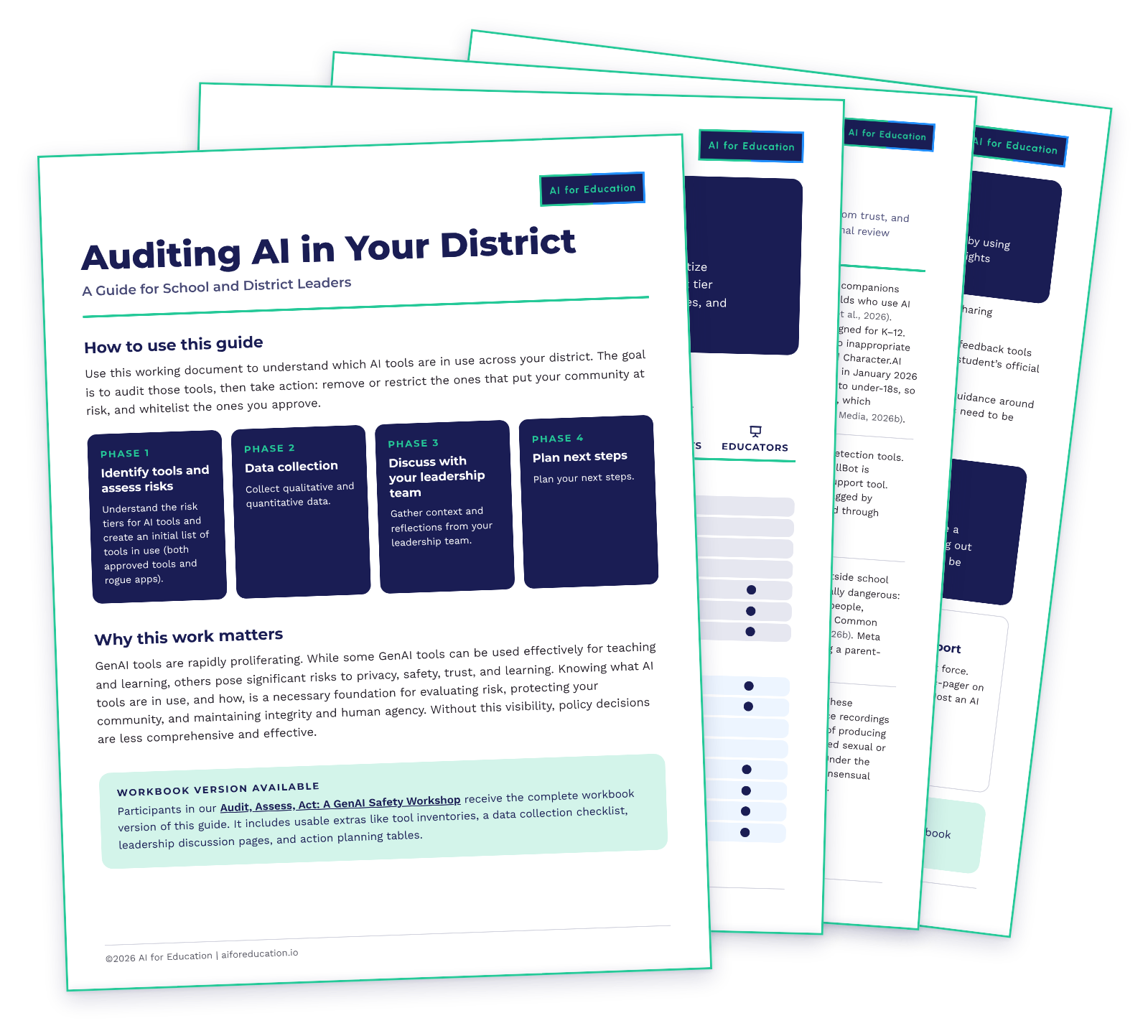
The importance of full visibility on the AI tools in use in your school or district.
GenAI tools are rapidly proliferating. While some GenAI tools can be used effectively for teaching and learning, others pose significant risks to privacy, safety, trust, and learning. Knowing what AI tools are in use, and how, is a necessary foundation for evaluating risk, protecting your community, and maintaining integrity and human agency. Without this visibility, policy decisions are less comprehensive and effective.
How to Use This Guide
Leadership teams can use this document as a guide to better understand which AI tools are in use across your district. The goal is to audit those tools, then take action: remove or restrict the ones that put your community at risk, and whitelist the ones you approve.
The Four Phases
Phase 1
Identify tools and assess risks: Understand the risk tiers for AI tools and create an initial list of tools in use (both approved tools and rogue apps).
Phase 2
Data collection: Collect qualitative and quantitative data.
Phase 3
Discuss with your leadership team: Gather context and reflections from your leadership team.
Phase 4
Plan next steps: Identify policy and procedure changes, training needs, and community support.
Workbook Version Available
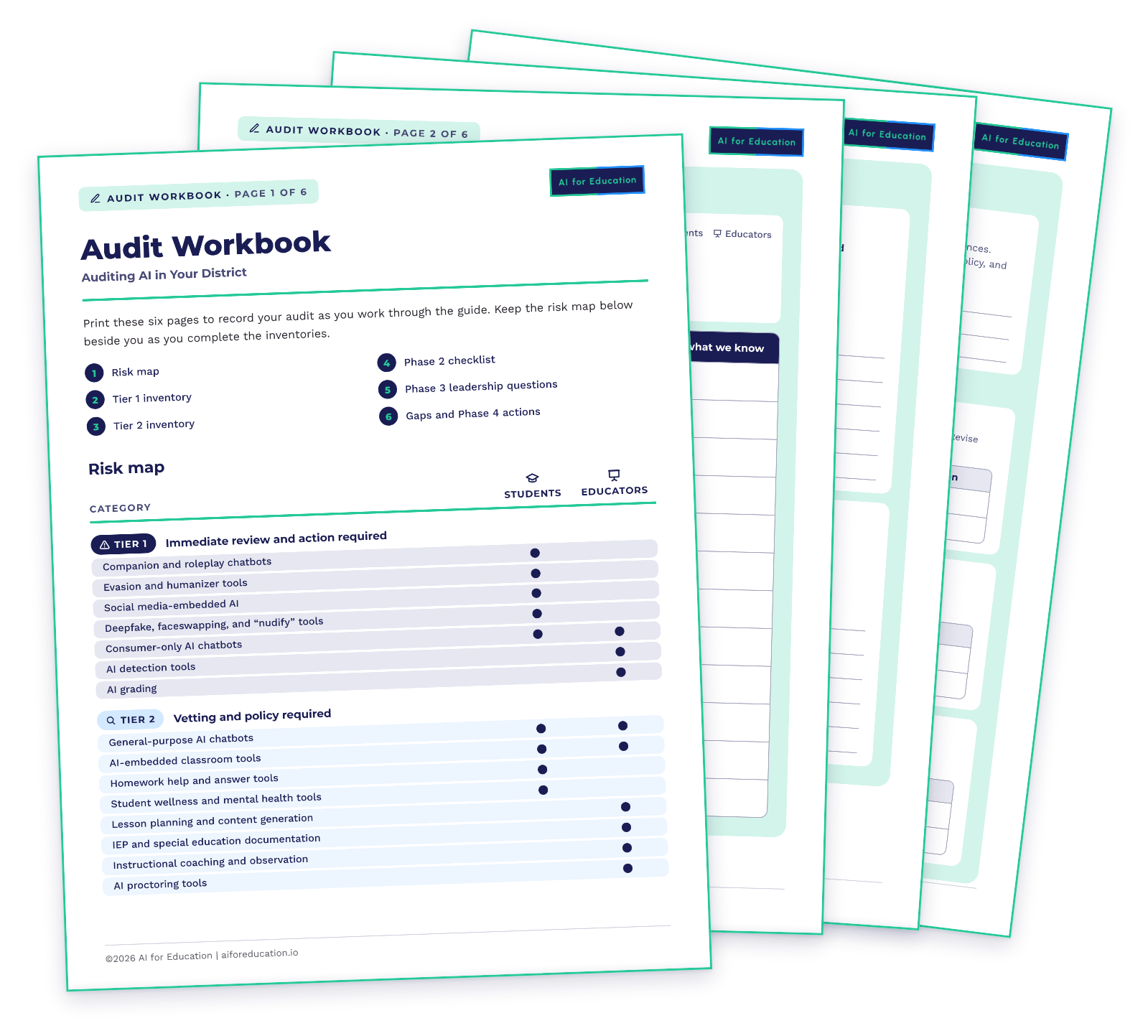
There is a version of this guide with a six-page workbook where you can record your progress through the audit’s four phases. This printable workbook provides places to document tool inventories, research, and leadership discussions.
The workbook version is available exclusively through our Audit, Assess, Act: A GenAI Safety Workshop.
GenAI Disclosure Statement
This resource was developed with support from Claude, which assisted with editing, design, and layout. All GenAI contributions followed from existing human drafts and were reviewed, revised, and verified by human authors, who made all final decisions.