The Case for AI Literacy
A CALL TO ACTION FOR SCHOOL AND DISTRICT LEADERS
Back in 2022, when ChatGPT was first released, many framed generative AI (GenAI) as
another “disruptive” technology like calculators or the Internet. Just a few years later, college professors question whether students are offloading their coursework to AI agents while more and more high school students say they have used GenAI for companionship.
Education, as a sector, adopts new approaches intentionally for good reason: teaching should be backed by evidence-based pedagogy, curricula, and tools. And when education has been forced to move quickly, as it did during the COVID-19 pandemic, it came with clear costs to student learning.
So how, then, do schools and districts address GenAI? Should it be integrated to make students “future ready”? Or should it be banned until research catches up and we’re more confident about the right tools and approaches?
We believe there’s a third path: schools can build community-wide AI literacy that centers students’ needs and focuses on critical, intentional, and responsible decision-making.
That's why we've released two new free resources:
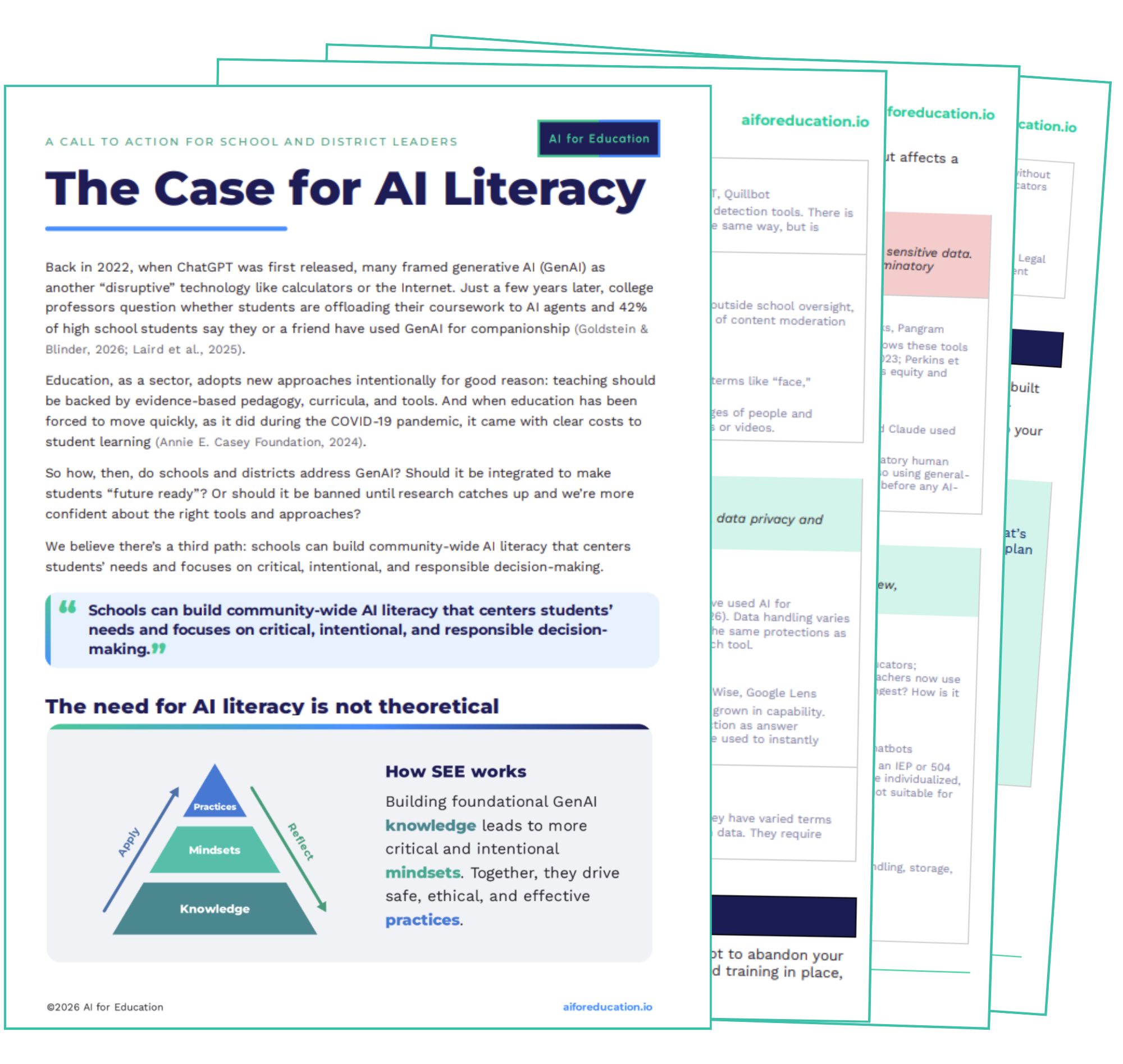
The Case for AI Literacy, a report for school and district leaders on why AI literacy matters now and what to do about it
A companion discussion guide that families and educators can use to talk with kids and teens about AI
Inside the report:
What recent research says about AI literacy and learning
The goals of AI literacy, grounded in the SEE Framework
What AI literacy looks like for students, teachers, and districts
Three steps your district can take now
PLUS: A COMPANION DISCUSSION GUIDE
Conversation starters for families and educators across informed, safe, ethical, and effective use, along with key ideas to share with kids and teens. "Why might a chatbot agree with you even if you're wrong?"