AI Policies vs Guidelines
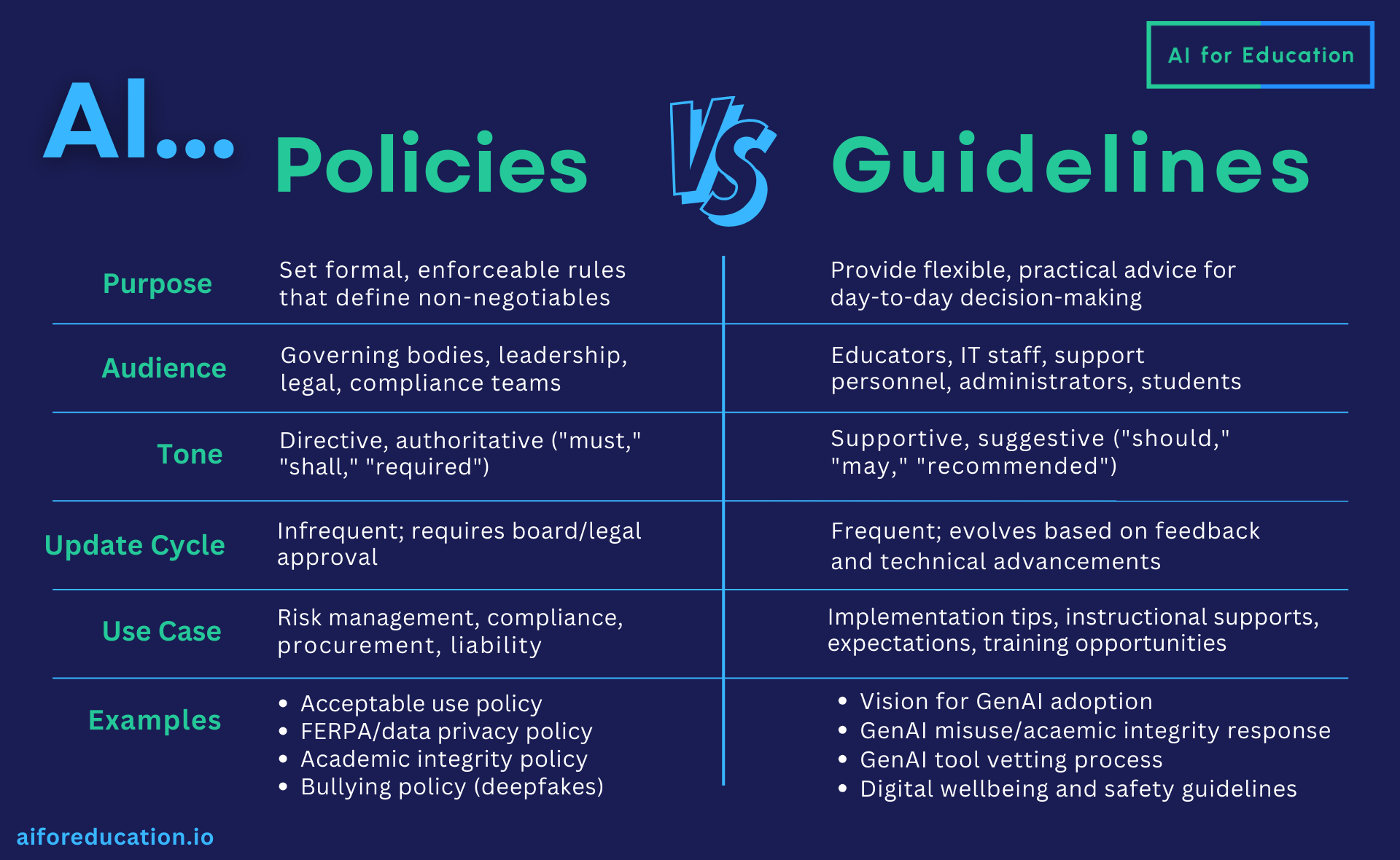
In the past few months, we've worked with partners who've run into the same challenge with AI adoption. They rolled out policies or guidelines without bringing people into the conversation first—no workshop, no consensus building, just documents that needed signatures or implementation.
Unsurprisingly, the result was frustrated staff expected to enforce or follow rules they had no part in creating, and leaders facing resistance instead of adoption.
Both AI policies and guidelines are critical for responsible AI adoption, but they have to be built intentionally, with stakeholders driving consensus, or they most likely won't work.
After working with hundreds of districts, we've created the resource below. Here are the best practices we recommend.
Policies are your compliance layer and are designed to protect your district. We suggest adaptations to existing:
✔️ Acceptable use policies
✔️ Data privacy/FERPA protections
✔️ Academic integrity standards
✔️ Cyberbullying policies (to add deepfakes)
Guidelines are your change management layer. They are the "why" that brings people along. We recommend including the following in your AI guidelines:
💡 Vision for GenAI adoption across your district
💡 GenAI misuse/academic integrity response protocols
💡 GenAI chatbot and EdTech tool vetting processes
💡 Digital wellbeing, data privacy, and student safety practices
💡 Implementation tips and instructional supports
💡 AI Literacy training opportunities and expectations
What matters most is that both policies and guidelines should be built with stakeholders, not handed down to them. They should evolve with feedback, evidence of impact, and technical advancements.
In all of our guideline and policy development work, we always start with AI literacy. It's important to build foundational understanding across stakeholders so that when policies and guidelines are developed, people can contribute meaningfully to the process and understand the "why" behind what they're being asked to implement.
Intentional stakeholder engagement isn't a nice-to-have. It's what we've seen drive adoption.