Ethical GenAI Use in Schools
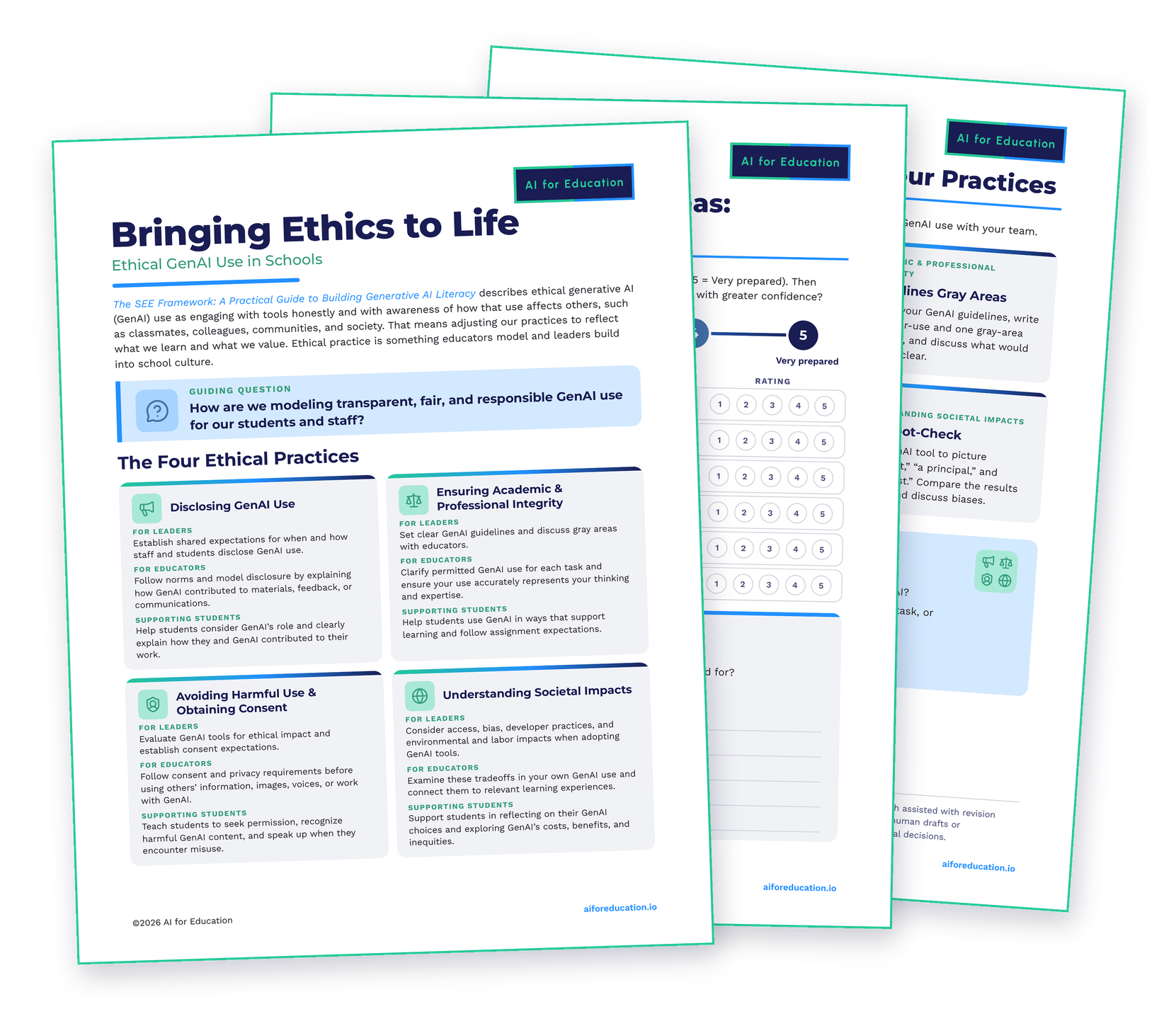
Use this resource to explore what ethical generative AI (GenAI) use looks like in schools, with specific actions for leaders, educators, and students.
So what is ethical GenAI use exactly? The SEE Framework: A Practical Guide to Building Generative AI Literacy breaks it down into four key practices:
Disclosing GenAI use
Ensuring academic and professional integrity
Avoiding harmful use and obtaining consent
Understanding societal impacts
Educators model these practices for students and leaders build them into school culture. To help, we’ve put together this resource that provides simple strategies for self-reaction and action, using common GenAI ethical dilemmas as starting points.
What’s inside:
The four ethical practices, each with a concrete action for leaders, educators, and supporting students
A team self-assessment to help your staff better understand how prepared they feel to handle six real-world scenarios, such as using GenAI to draft IEP recommendations, screen job applications, or summarize student notes for a family meeting
Four quick PD activities, one for each practice: drafting disclosure statements, finding gray areas in your GenAI guidelines, planning a response to a deepfake incident, and spotting bias in GenAI outputs
Ongoing reflection questions to bring back to staff meetings that can help identify strengths, gaps, and next steps
Credit: Emmalyn Green created the initial draft and design of this resource.
Generative AI Disclosure Statement
This resource was developed with support from Claude, which assisted with editing, design, and layout. All GenAI contributions were reviewed, revised, and verified by human authors, who made all final decisions.