
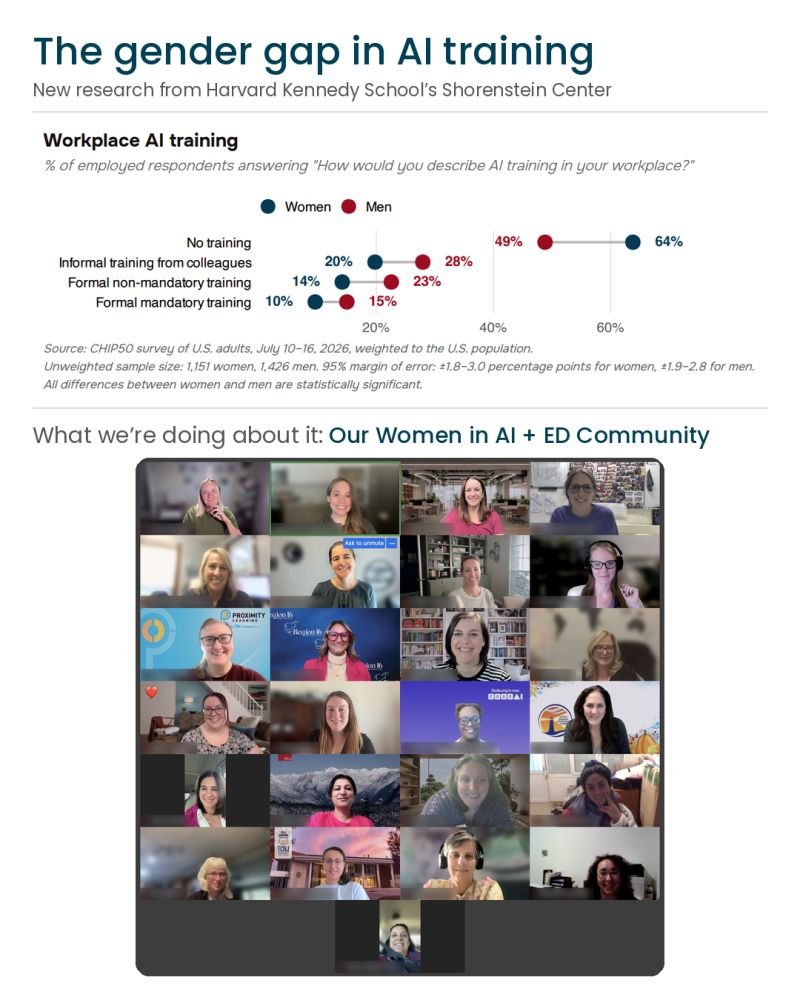
New research from Harvard Kennedy School’s Shorenstein Center, based on a survey of 5,403 U.S. adults, highlights gender gaps in AI. The finding that stood out most to me: among employed adults, women were less likely than men to have AI training, mentorship, or encouragement at work. Nearly two-thirds of women (64%) said their workplace offers no AI training, compared with 49% of men.
That matters because those supports were linked to more AI use, more confidence, and more perceived value for both women and men. Even so, women who had that support often reported lower use and confidence than men who did.
A few more findings from the report:
- Women were more likely than men to say they’ve never used AI (29% vs. 22%), and less likely to use it regularly (16% vs. 25%).
- Trust in AI is low overall, but lower among women: 23% of women trust none of the listed sources for AI information, compared with 15% of men.
- Among people who use AI occasionally, rarely, or never, privacy and distrust of AI’s outputs were the top barriers, and women cited both more often than men.
The concerns women raised most often, protecting personal data and the accuracy of AI’s outputs, are at the core of safe and effective AI use. The researchers are clear that closing these gaps isn’t about getting women to use or trust AI more. It’s about whether women have equal access to understand and use it, and equal influence over how it’s built.
Building women’s expertise in AI, and finding opportunities for mutual support, is why we started our Women in AI + ED community. In our meeting today, we talked about how to set up hard discussions about GenAI with intention.
We need more communities like ours that limit gatekeeping and are safe places to ask questions and learn, so developing expertise in AI doesn’t depend on where you work or whether you have a mentor.
Link to the full report and how to join the Women in AI + ED community in the comments.
The Gender Gap in AI

Next
Next