
Where Does AI Literacy Fit?
A common struggle we hear from school and district leaders is finding a spot for student AI literacy. Schedules are packed, curricula are set, and AI literacy ends up slotted into assemblies, advisory blocks, or after-school sessions alongside everything else competing for that same supplemental space.
Evidence is mounting that AI literacy can't be a one-off experience (or ignored). Research shows that GenAI usage without intentional literacy instruction can do more harm than good.
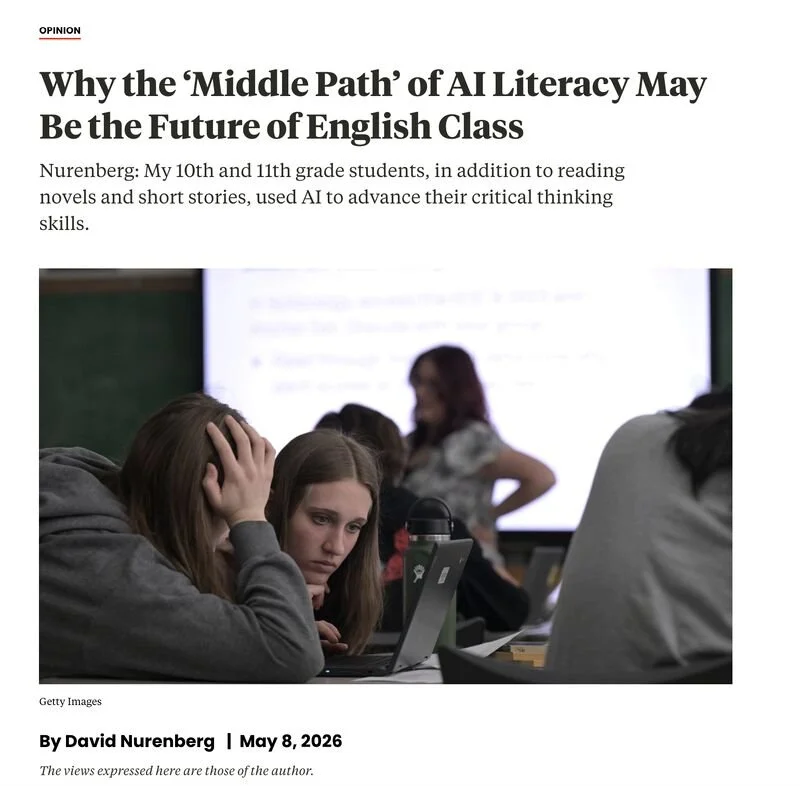
A recent piece in The 74 by high school English teacher David Nurenberg provides a potential path forward. With his 10th and 11th graders, Nurenberg embedded AI literacy directly into his existing English curriculum. His approach represents the "third option" both the Brookings Institution and the American Psychological Association have recommended: teaching AI literacy in context.
His students still read novels and wrote essays, but they also used AI outputs as a text. They brought chatbots into literary discussions and described the exchanges as "bizarre" and "disjointed," a great signal of the "Stay Critical" mindset from our SEE Framework. They examined how tools like Grammarly altered integral parts of their authentic voices, raising real questions about ethics and autonomy in their own writing.
This approach required curricular tradeoffs. Not everything Nurenberg used to cover made it into the semester. But if we're to make student AI literacy a priority, it's likely going to require more subject-area integration. GenAI cuts across every subject area.
And let's be honest: it's already part of the curriculum, just not officially. We owe it to students to help them think critically about GenAI, especially as it relates to their learning, and to give them more agency over its use.
